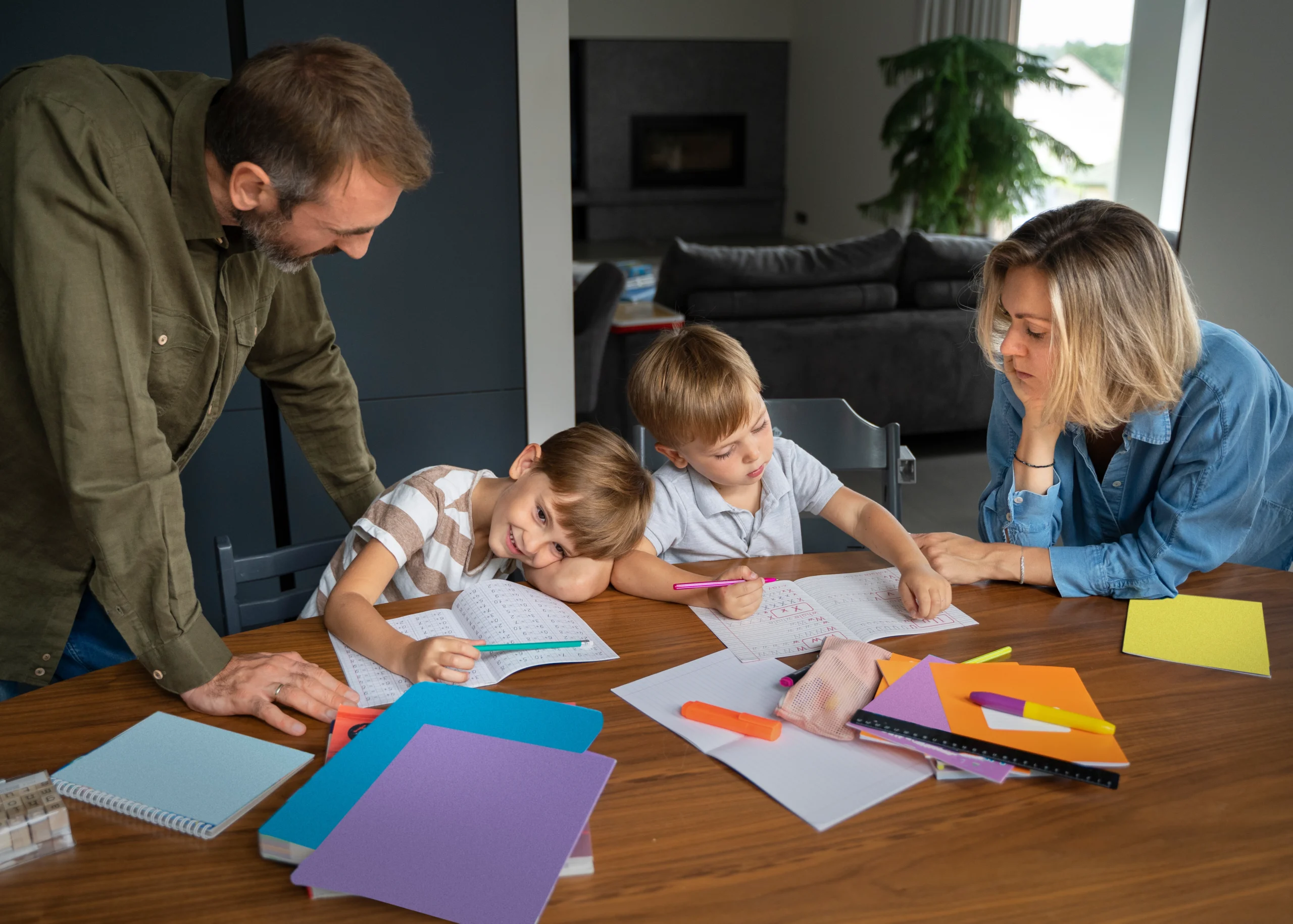


Every parent has experienced some version of this moment: you find what looks like the perfect educational resource online, your child sits down to use it, and nothing happens. No spark. No engagement. Within ten minutes, they’ve wandered off.
It’s not that the resource was bad. It’s that it wasn’t built for your child’s learning style, age, or the subject that actually interests them right now.
Most guides to family learning resources hand you a flat list of websites and apps and call it done. This guide is organized differently. You’ll find resources sorted by subject, age group, and crucially, by how your child learns best whether they’re a visual learner, a hands-on builder, an auditory listener, or a reader. You’ll also find a dedicated section on social-emotional learning and support for children with learning differences, two areas almost universally skipped in comparable roundups.
Everything in this guide is either free or offers a meaningful free tier. Where paid options are included, they’re labeled clearly.
Before scrolling to find resources, take 60 seconds to identify which of these describes your child most:
Throughout this guide, resources are tagged [Visual], [Auditory], [Hands-On], or [Reading/Writing] so you can scan for the formats your child actually responds to.
Where an age range is listed, it follows this shorthand:
Literacy is the foundation every other subject rests on, and it’s the most universally covered category in family education for good reason. These are the resources that consistently earn the strongest recommendations from educators, parents, and researchers.
| Resource | Age Range | Best For | Cost | Learning Style |
| Khan Academy Kids | PK–EE | Reading readiness, phonics, early comprehension | Free | Visual, Hands-On |
| Starfall | PK–EE | Phonics, letter sounds, early reading practice | Free (core) | Visual, Auditory |
| ReadWorks | EE–HS | Non-fiction and fiction reading passages with comprehension questions | Free | Reading/Writing |
| Storyline Online | PK–ME | Books read aloud by actors and celebrities | Free | Auditory, Visual |
| Learning Ally | EE–HS | Audiobook library; particularly strong for struggling readers | Subscriptio n | Auditory |
| Newsela | ME–HS | Real news articles adapted to reading level; great for building reading stamina | Free (basic) | Reading/Writing |
| ABCmouse | PK–EE | Full early learning curriculum including literacy | Subscriptio n | Visual, Hands-On |
Actionable tip: For early readers (ages 4–7), pair Starfall (phonics fundamentals) with Storyline Online (love of stories) on alternating days. One builds mechanics; the other builds motivation. Both are free.
Science of Reading note: If your child is in Grades K–3 and struggling with reading, look specifically for resources grounded in phonics and phonemic awareness not just whole-language or “balanced literacy” approaches. Starfall, Khan Academy Kids, and Learning Ally all align with current research-backed reading instruction.
Math anxiety is real for kids and for parents. The best at-home math resources make skills feel achievable and, where possible, genuinely fun. The ones below are organized by what actually works across different ages and learning styles.
| Resource | Age Range | Best For | Cost | Learning Style |
| Khan Academy | EE–HS | Full K–12 math curriculum, mastery-based, self-paced | Free | Visual, Reading/Writing |
| Prodigy Math | EE–ME | Math practice via fantasy role-playing game | Free (basic) | Visual, Hands-On |
| Mathigon | ME–HS | Visual, interactive math geometry, probability, algebra | Free | Visual, Hands-On |
| ST Math | PK–ME | Spatial-visual math puzzles; no language barrier | Free trial / School license | Visual, Hands-On |
| IXL Math | PK–HS | Skills practice with real-time feedback; tracks progress by standard | Subscription | Reading/Writing |
| Bedtime Math | PK–ME | Daily math “story problems” designed to be read together at bedtime | Free | Auditory, Reading/Writing |
| NRICH | EE–HS | Rich, open-ended problem-solving activities; excellent for curious math learners | Free | Hands-On |
Actionable tip: Bedtime Math deserves special mention for families with younger children. It publishes one short, funny math problem per day framed as a story ideal for auditory/reading learners and for parents who want to build math confidence in 5 minutes without any prep.
Social-emotional learning the development of self-awareness, empathy, responsible decision-making, and relationship skills is one of the most under-resourced areas in family learning guides. Yet research consistently shows that children with stronger SEL skills perform better academically and have better long-term outcomes.
These resources address feelings, conflict, community, and character development directly.
| Resource | Age Range | Best For | Cost | Learning Style |
| Sesame Street in Communities | PK–EE | Emotional regulation, big feelings, family stress topics; evidence-based | Free | Visual, Auditory |
| CASEL Family Resources | EE–MS | Parent guides on supporting SEL at home; aligned with school SEL frameworks | Free | Reading/Writing |
| GoNoodle | PK–ME | Mindfulness and movement videos; excellent for emotional regulation breaks | Free | Auditory, Hands-On |
| Zones of Regulation (parent guide) | EE–ME | Framework for helping kids identify and manage emotional states | Free resources + paid book | Reading/Writing |
| Class Dojo Beyond School | PK–ME | Short video series teaching growth mindset, empathy, and resilience | Free | Visual, Auditory |
| Second Step Family Resources | PK–MS | Evidence-based SEL curriculum with family take-home activities | Free (selected) | Hands-On, Reading/Writing |
Actionable tip: For younger children (ages 4–8), use Sesame Street in Communities during or after emotionally challenging moments (a move, a new sibling, a loss) the content is specifically designed for exactly these situations and draws on decades of child development research.
On civic empathy: If you want to extend SEL into civics and community thinking, the Constitution Center’s “Civic Parenting” podcast and its “Family Lit Circles” program are genuinely strong, underused resources for ages 8–12.
Subject-specific resources let children go deep on what genuinely interests them often more powerful for long-term learning than broad curriculum coverage.
| Resource | Age Range | Subject | Cost | Learning Style |
| National Geographic Kids | EE–MS | Science, geography, animals, world cultures | Free | Visual, Reading/Writing |
| Smithsonian Learning Lab | ME–HS | History, art, science access to actual museum collections | Free | Visual, Reading/Writing |
| NASA Kids’ Club | EE–ME | Space, STEM exploration, astronaut videos | Free | Visual, Hands-On |
| Mystery Science | EE–ME | Open-and-go science lessons with hands-on experiments | Free (selected) | Hands-On |
| iCivics | ME–HS | Civics and government via strategy games | Free | Visual, Hands-On |
| PBS LearningMedia | EE–HS | Cross-subject video library science, history, arts, social studies | Free | Visual, Auditory |
| Library of Congress Education | ME–HS | Primary source materials, history, civics exceptional for deep learners | Free | Reading/Writing |
On museums as family learning resources: Several of the world’s most respected educational institutions now offer free digital access including the Smithsonian, the British Museum, and the Metropolitan Museum of Art. These aren’t replacements for in-person visits, but for visual learners especially, a self-directed “virtual museum afternoon” can rival any worksheet-based lesson.
Rather than a flat app list, here’s a learning-style-first breakdown so you can find the right format for your child rather than the most popular app overall.
Access to books physical, digital, and audio is one of the most reliable predictors of reading development. Here are legitimate, free ways to get more books into your home learning routine.
| Resource | Format | Age Range | Cost |
| Local Public Library (digital card) | eBooks, audiobooks, magazines | All ages | Free |
| OverDrive / Libby App | eBooks, audiobooks via library card | All ages | Free with library card |
| Open Library (Internet Archive) | Digital books borrowable online | All ages | Free |
| LibriVox | Free public-domain audiobooks read by volunteers | ME–HS | Free |
| Storyline Online | Picture books read aloud by actors | PK–ME | Free |
| Learning Ally | Human-narrated audiobooks; particularly for struggling readers and students with dyslexia | All ages | Subscription |
| Project Gutenberg | Classic texts in digital format | MS–HS | Free |
Actionable tip: If your child has a library card but you haven’t yet set up the Libby app, do it today. It connects your card to every library in your district and lets your child borrow eBooks and audiobooks instantly, with no late fees. Most families don’t realize this is available and already paid for.
Movement-based learning is one of the most underused tools in family education and one of the most effective, particularly for kinesthetic learners and for children who struggle to sit still for traditional screen-based learning.
| Resource | Age Range | Focus | Cos t | Style |
| GoNoodle | PK–ME | Guided movement videos, brain breaks, mindfulness | Free | Hands-On, Auditory |
| Cosmic Kids Yoga (YouTube) | PK–ME | Story-based yoga and mindfulness for children | Free | Auditory, Hands-On |
| PE with Joe (YouTube) | PK–MS | Family workout videos; the original lockdown fitness teacher | Free | Hands-On |
| Just Dance (YouTube versions) | EE–HS | Dance-based movement; excellent for auditory/kinesthetic learners | Free | Auditory, Hands-On |
| Body Brain Education (research) | PK–HS | Research on movement-based learning for parents to apply at home | Free | Reading/Writing |
Why this matters: Research from Harvard Medical School and others consistently shows that even 10–20 minutes of moderate physical activity before a learning session meaningfully improves attention, working memory, and cognitive flexibility in children. Building a short movement break before homework or a learning session not just as a reward after is one of the highest-leverage habits families can develop.
Children with dyslexia, ADHD, dyscalculia, or other learning differences need resources that are specifically designed for them not modified versions of standard tools. This section addresses that directly.
Understood.org is the single most valuable starting point for families navigating any learning or attention difference. It offers a learning profile tool, an active parent community, and curated resources organized by diagnosis and age group. If you’re new to navigating a child’s learning difference, start here.
Older learners have specific needs: rigorous content, flexibility, credentials where possible, and content that respects their growing independence. These resources serve that audience well.
| Resource | Subject | Best For | Cost |
| Khan Academy | All subjects, incl. SAT/ACT prep | Self-paced academic support; free test prep | Free |
| Crash Course (YouTube) | History, science, literature, philosophy | Auditory/visual learners who respond to engaging narrative | Free |
| MIT OpenCourseWare | College-level STEM | Advanced or gifted teens ready for university-level content | Free |
| Coursera (audit option) | Any subject | Teens who want to explore a university course without paying | Free (audit) |
| NoRedInk | Writing and grammar | Building writing skills with personalized, interest-based content | Free basic |
| Desmos | Advanced math | Visual math tools graphing calculator, geometry, algebra | Free |
| Duolingo / Babbel | World languages | Language acquisition alongside school coursework | Free / Subscription |
On credentials for teens: If your teenager is pursuing college admissions or wants to demonstrate learning beyond a transcript, Coursera (audit option), edX, and Khan Academy’s SAT prep are genuinely competitive, free resources not generic “educational content” but structured courses with real learning outcomes.
Some of the most valuable family learning resources aren’t for children they’re for the adults helping them learn. These parent-facing resources give you research, strategy, and community.
The most common mistake families make with educational resources isn’t choosing the wrong ones it’s treating them as a replacement for routine rather than a support for one. A simple, consistent structure does more for learning outcomes than the best app ever will.
A framework that works for most families:
None of this requires a specialized curriculum, expensive subscriptions, or significant prep time. The resources in this guide are designed to fit into that kind of low-lift, sustainable daily rhythm.