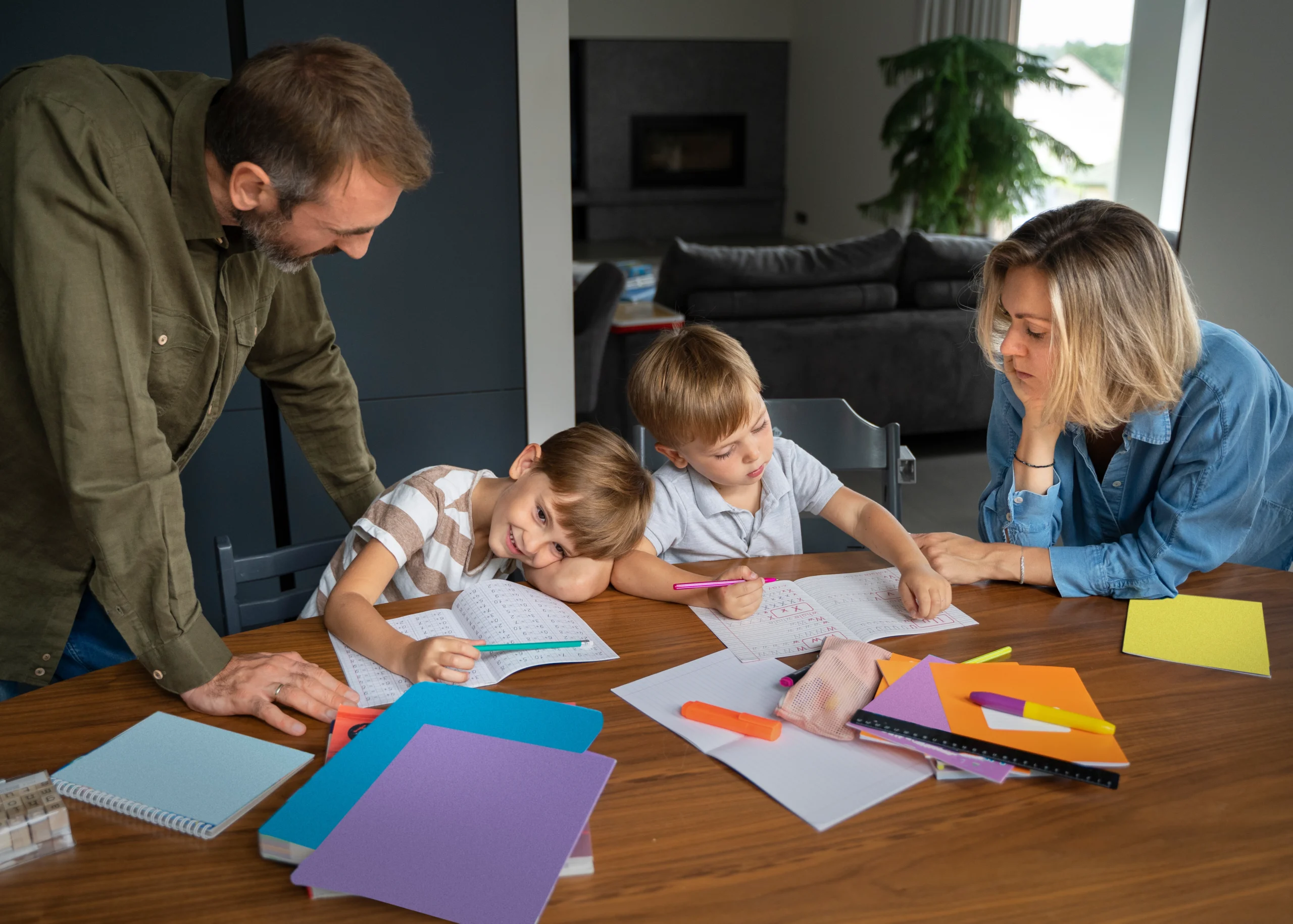

Picture a nonprofit that runs a strong family support program. Parents are showing up, children are thriving, and staff are deeply committed. Yet grant application after grant application comes back with the same polite rejection. The program is good. The proposals are well written. So what is missing?
Often, the missing piece is a relationship. Foundation funding is rarely just a transaction between a proposal and a check. It is a partnership built on trust, shared goals, and consistent communication over time. Knowing how nonprofits can build relationships with foundations can be the difference between chasing grants every year and building a stable base of support for your family programs.
In this guide, we will walk through why these relationships matter, how foundations think, and a step-by-step approach to researching, connecting with, and stewarding foundation funders. We will also cover common mistakes, ways to track your relationships, and answers to frequently asked questions.
Foundations receive far more requests than they can fund. When program officers and trustees make decisions, they are weighing more than a budget and a narrative. They are asking whether they believe in the organization, whether leadership is honest and capable, and whether the work genuinely fits their goals. A relationship gives them a way to answer those questions before a proposal ever lands on their desk.
For family-focused nonprofits, this matters even more. Work with children and parents is complex, long-term, and often hard to capture in a single page of outcomes. A funder who knows your team and has seen your work understands the context behind the numbers.
While every foundation is different, most are drawn to nonprofits that show:
• Clear impact: A well-defined approach and evidence that families benefit.
• Honesty and transparency: Openness about both successes and challenges.
• Mission alignment: A genuine fit with the foundation’s priorities, not a stretch.
• Strong leadership and financial health: Confidence that funds will be managed responsibly.
• Community trust: Respect from the families and partners you serve.
A good foundation relationship offers more than money. Funders often provide introductions to other donors and partners, advice on strategy, visibility in their networks, and credibility that helps you attract additional support. Over time, a trusted relationship can also lead to multi-year or general operating funding, which gives your team room to plan and focus on families instead of constant fundraising.
Before you reach out, it helps to understand the other side of the table.
Not all foundations operate the same way. The most common types include:
• Private foundations: Typically funded by an individual, family, or business, with their own priorities and trustees.
• Family foundations: A subset of private foundations governed by members of a founding family, often with strong personal connections to certain causes or places.
• Community foundations: Public charities that pool donations and make grants within a specific region.
• Corporate foundations: Giving arms of companies, often tied to the communities where the company operates.
Each type has its own culture, decision-making process, and level of openness to new relationships. Knowing which one you are approaching shapes how you communicate.
Foundations that fund family programs tend to focus on areas such as early childhood development, parenting support, housing stability, family health and wellbeing, and education and workforce opportunities. Some prioritize specific populations, such as young parents or families experiencing poverty, while others focus on a particular neighborhood or city.
Most foundations publish guidelines, strategy documents, or priority areas. Some accept open applications on a set schedule, while others fund by invitation only. Understanding deadlines, grant sizes, and decision timelines helps you plan your outreach well in advance instead of scrambling at the last minute.
A helpful mindset: think of a foundation not simply as a funder, but as a partner with its own goals, constraints, and accountability to its board. Your job is to show how your work helps them achieve what they care about.
Strong relationships start with thoughtful preparation.
Start by building a list of foundations whose priorities match your family programs. Useful sources include foundation websites, annual reports, and grant databases such as Candid. Nonprofit and foundation tax filings, commonly known as Form 990s in the United States, can also reveal who a foundation funds and how much it gives.
Look at who the foundation has funded in recent years. Pay attention to grant sizes, geographic focus, types of programs, and whether they tend to support small grassroots groups or larger established organizations. This tells you whether your organization is a realistic fit and how to frame your request.
It can be tempting to stretch your mission to match a funder’s interests. Resist that urge. A forced fit rarely leads to a lasting relationship, and it can pull your organization away from the families you exist to serve. Focus on foundations where the overlap is natural and genuine.
Identify who actually handles relationships at the foundation. That may be a program officer, a grants manager, or, for smaller family foundations, a trustee. Check whether anyone on your board, staff, or partner network knows someone connected to the foundation. A personal connection can open doors that a cold email cannot.
A brief introduction from a mutual contact, such as a board member, a fellow grantee, or a community partner, can set a positive tone right away. Ask your contact if they would be comfortable making the connection, and give them a short summary of your work to share. Always respect the foundation’s stated guidelines, though. If they ask that you not make unsolicited contact, follow their process.
If you are reaching out directly, keep your message concise and specific. Mention why you chose this foundation, how your family programs connect to their priorities, and what you would like to learn. Avoid generic mass emails. Program officers can spot them instantly, and they rarely get a response.
A strong introductory email usually includes:
• A brief, genuine reason for reaching out
• One or two sentences on your family programs and the results you are seeing
• A clear and modest request, such as a short conversation
• Appreciation for their time
Have a simple, well-designed summary ready to share. It should explain the need you address, your approach, who you serve, and the outcomes you have achieved. Keep the language plain and free of jargon, and include one or two powerful facts or quotes that bring your work to life.
The first meeting is not the time for a hard ask. Treat it as a chance to learn about the foundation’s goals, share your work, and explore whether there is a fit. Funders appreciate nonprofits that listen. Ask questions such as what they are hoping to see change for families in your community, and what they find most useful from the organizations they support.
The strongest foundation relationships are not built only around deadlines. They grow through steady, genuine engagement.
Keep interested funders in the loop with short, meaningful updates. A quarterly email with a program highlight, a milestone, or a brief family story goes a long way. The goal is to be a familiar and trusted presence, not someone who only appears when funds are needed.
Site visits, open houses, and community events let foundation staff experience your programs firsthand. Seeing parents and children engaged in your services is often more convincing than any report. If you share family stories or invite families to participate, always make sure they have given informed consent and feel comfortable and respected.
Foundations see patterns across many organizations and communities. Asking for their perspective on a new idea, a challenge you face, or a trend in the field shows humility and invites collaboration. It also turns the relationship into a two-way exchange rather than a one-way request.
Some funders enjoy frequent updates, while others prefer an occasional note. Pay attention to how they respond and adjust accordingly. Be concise, be prepared, and always follow through on what you say you will do.
Foundations want evidence, but they also want to understand the human side of your work. The most compelling communication blends outcomes, such as the number of families served, improvements in child development, or increases in parent employment, with real voices and experiences. Numbers show scale. Stories show meaning.
How you describe the families you serve says a lot about your organization. Use strength-based language that highlights resilience, goals, and progress rather than focusing only on hardship. Protect privacy, obtain consent for stories and photos, and involve families in shaping how their experiences are shared whenever possible.
No program is perfect, and experienced funders know it. Sharing what has not worked and what you learned from it builds credibility. A nonprofit that can say, “Here is what we tried, here is what we found, and here is how we are adjusting,” demonstrates exactly the kind of learning mindset that foundations value.
Stewardship is how you turn a single grant into a lasting partnership. Many nonprofits celebrate the award and then go quiet, which is one of the fastest ways to lose a funder.
A prompt, sincere thank-you matters. Beyond an official receipt, consider a personal note from your executive director, or a short message that mentions specifically what the grant will make possible for families.
Submit required reports by the deadline, and make them clear and honest. Include outcomes, lessons learned, and an accurate picture of how funds were used. Reliable reporting builds confidence and makes future conversations easier.
Programs evolve. Staff leave, timelines shift, and unexpected challenges appear. If something changes, tell your funder early and explain your plan. Most foundations respond well to open communication, and far worse to surprises.
Go beyond the required report. Share a story about a family who benefited, a milestone your team reached, or a new insight gained. Showing the real impact of their investment reminds funders why they chose to support you.
When the relationship is strong, talk about what could come next. Ask whether the foundation offers renewals, multi-year grants, or general operating support. Share your long-term vision and how continued partnership could deepen impact for families.
Even well-intentioned organizations can undermine their own efforts. Here are common pitfalls and how to avoid them.
| Common Mistake | Better Approach |
| Reaching out only when a deadline is near | Start building the relationship months before you plan to apply |
| Sending the same generic proposal to many funders | Tailor each request to the foundation’s priorities and language |
| Overpromising outcomes | Set realistic goals and be honest about what you can achieve |
| Going silent after receiving funds | Send regular updates and a meaningful thank-you |
| Ignoring funder guidelines | Read and follow application instructions carefully |
| Treating foundations only as sources of money | Approach them as partners with shared goals for families |
Relationships can easily slip through the cracks when staff are busy. A little structure keeps your efforts consistent.
A spreadsheet or a basic donor database is enough to get started. For each foundation, record contact details, past conversations, grant history, deadlines, and planned next steps. Reviewing this regularly helps you stay proactive instead of reactive.
Every key funder should have a clear point person on your team. Depending on the foundation, that might be your executive director, a development lead, or a program manager. Others, such as board members and program staff, can support the relationship by joining meetings or sharing updates. Clear ownership prevents confusion and ensures follow-through.
You cannot measure trust with a single number, but a few indicators can show whether your efforts are working:
• How quickly and warmly funders respond to your communications
• The number of meetings, calls, or site visits held
• Renewal rates and growth in grant size over time
• Invitations to funder events or introductions to other partners
Use these signals to adjust your approach and invest more in the relationships that matter most.
Consider a hypothetical small nonprofit that provides parenting classes and early learning support for local families. For years, it applied to a handful of foundations each year and received mixed results. Applications were rushed, and there was little contact with funders between submissions.
The organization changed its approach. First, it researched a local family foundation whose priorities closely matched its work, studying past grants and noting that the foundation often supported community-based early childhood programs. A board member who knew one of the trustees offered a warm introduction.
The executive director requested a short conversation rather than a grant. She listened to the foundation’s goals, shared a one-page overview of the program, and asked what the foundation hoped to see for families in the community. In the following months, the nonprofit sent a brief quarterly update, invited foundation staff to a family event, and asked for feedback on a new program idea.
When the next grant cycle opened, the nonprofit submitted a focused proposal that reflected what it had learned. The foundation approved the request, and after the organization delivered a clear, honest report, it was invited to apply for a multi-year grant. The takeaway is simple: the strongest proposal in the world is made stronger when the funder already knows and trusts the people behind it.
Nonprofits can start with grant databases like Candid, foundation websites, and annual reports. Reviewing past grants shows which foundations support family and early childhood work in your area. Community foundations, local partners, and fellow nonprofits are also valuable sources of leads and introductions.
In most cases, yes, as long as the foundation allows it. A brief introduction or conversation helps you confirm fit and understand priorities. However, some foundations do not accept unsolicited contact, so always review their guidelines first and follow their stated application process.
There is no single rule, but a short update every few months is a good starting point. Pay attention to each funder’s preferences. Quality matters more than quantity, so focus on meaningful news, outcomes, and stories rather than frequent, lengthy messages.
Program officers generally want clarity, honesty, and alignment with the foundation’s goals. They look for a well-defined approach, evidence of impact, responsible financial management, and a willingness to learn. Clear communication and reliable reporting also build lasting confidence.
Deliver on your commitments, report honestly, and keep communicating after the grant ends. Share outcomes and lessons learned, invite funders to see your work, and discuss future goals. Strong stewardship builds trust, which often leads to renewals and multi-year partnerships.
Foundation funding for family programs is driven by more than a strong proposal. It is driven by trust, shared purpose, and steady communication. By researching carefully, making thoughtful introductions, sharing your story honestly, and stewarding funders after every grant, your nonprofit can move from one-time requests to lasting partnerships.
The process takes time, but the rewards are significant: more stable funding, deeper support, and the freedom to focus on what matters most, which is helping families thrive. Start small. Choose one or two foundations that truly align with your mission, reach out with curiosity, and keep showing up with honesty and care.
Ready to strengthen your foundation relationships? Download our free grant readiness checklist, subscribe to our newsletter for fundraising tips, or contact our team to learn how we can support your nonprofit.